





Monday, 26 January 2026
OUR ANGLE ON THE PROSTORE SNOWBOARDS FREAK
THE INSIDE SCOOP RE THE PROSTORE SNOWBOARDS FREAK
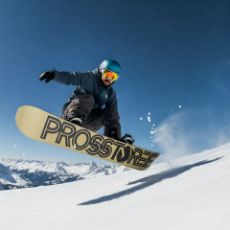
Finding the right all mountain snowboard is often a trade off between park playfulness and high speed stability. If you are looking for a deck that refuses to be boxed into a single category, the FREAK is a tool designed for that exact versatility. At 158cm, this board sits in the sweet spot for the average rider who wants enough surface area for powder float but enough maneuverability for technical rotations. Our opinion is that the FREAK effectively bridges the gap between a traditional camber board and a modern rockered profile.
We think the core of the FREAK is where the technical advantage begins. Most riders search for a board that has enough pop for side hits but won't wash out on a hard carve. The FREAK utilizes a specific wood core density that provides a snappy response without the punishing stiffness of a dedicated big mountain board. In our opinion, the mid flex rating of the FREAK allows you to press into a butter on the flats while still feeling secure when you are pointing it down a steep groomer. We have observed that the GREEN ORANGE aesthetic is not just for style; it provides a high level of visibility in low light or snowy conditions which is a subtle but important safety benefit.
Edge hold is a frequent concern for those riding in icy or variable conditions. The FREAK addresses this through a sidecut geometry that creates multiple contact points along the rail. We think this provides a mechanical advantage on firm snow, allowing the FREAK to bite in where other boards might slide. Our opinion is that this makes the FREAK an excellent choice for riders who deal with morning ice but want to transition into afternoon slush without changing their gear.
Weight and swing weight are critical for anyone looking to take their freestyle game outside of the park boundaries. At 158cm, the FREAK manages its mass by tapering the thickness toward the tips. We think this reduced weight in the nose and tail makes the FREAK feel much shorter and more agile in the air than its physical length suggests. We have noticed that this design allows the FREAK to pivot quickly in tight trees where a slower, heavier board might feel sluggish.
Durability and base speed are the final pillars of a high quality snowboard. The FREAK features a high density sintered base that is designed to stay fast even when the wax starts to wear thin. We think the wax absorption of the FREAK is superior to extruded alternatives, meaning you spend less time in the tuning shop and more time on the hill. Our advice is to keep the edges of the FREAK sharp near the bindings to fully leverage its carving potential.
Whether you are dropping into a technical chute or spending the day lapping the terrain park, the FREAK offers a balanced platform that rewards aggressive riding. We think it addresses the common search for a "one board quiver" by excelling in a variety of snow depths and terrain types. By prioritizing a responsive flex and superior edge grip, the FREAK ensures that your focus stays on your line rather than your equipment's limitations. In our opinion, the FREAK represents a calculated approach to modern snowboarding where performance and fun are given equal weight.
PRODUCT DETAILS
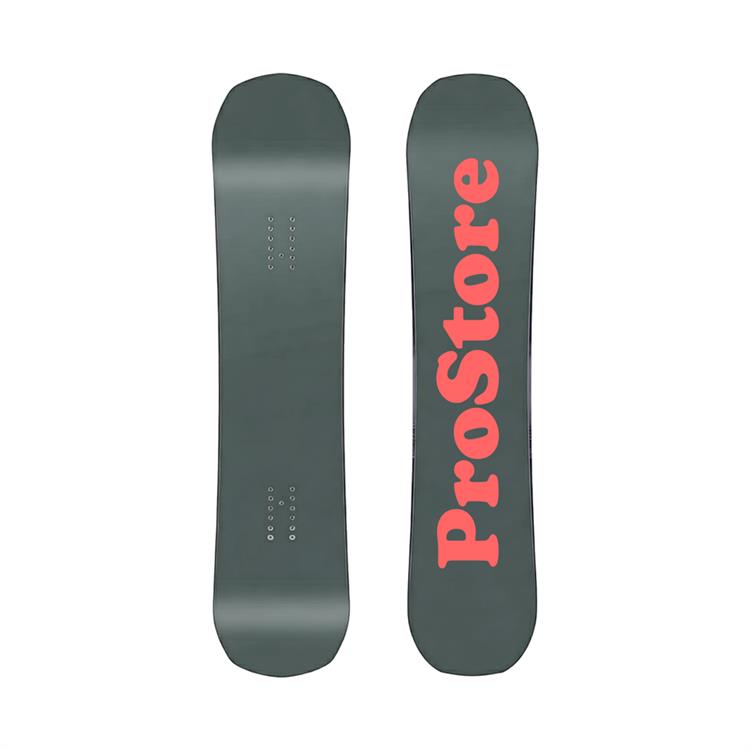
Discover Product Here
FULL PRODUCT DETAILS
This snowboard is crafted with precision and performance in mind.
TOP FEATURES:
• The diamond-shaped carbon fiber layers are built into the board, making it more lively with more pop.
• The extra thick and durable edges are designed to withstand impacts on rails, boxes, and other terrain park features.
• Extra width at the binding inserts providing more edge control, especially on hardpack and ice, and can reduce toe and heel drag for larger boot sizes.
PRODUCT HIGHLIGHTS
• Diamond Laminates
• Railkiller Edge
• Powerlite Core
• Power Pods
• Sintered Speed Formula II Base
• Cam-Out Camber
FULL FEATURE DISCOVERY
• The diamond-shaped carbon fiber layers are built into the board, making it more lively with more pop.
• The extra thick and durable edges are designed to withstand impacts on rails, boxes, and other terrain park features.
• The ultra-lightweight tip-to-tail wood core reduces board weight while providing durability and a snappy response when carving.
• Extra width at the binding inserts providing more edge control, especially on hardpack and ice, and can reduce toe and heel drag for larger boot sizes.
• Designed to be very durable and absorb wax well providing excellent glide.
• The hybrid board profile provides the pop and response of camber while maintaining the forgiveness and playfulness of a rocker board, giving riders maximum versatility.
WHY BUY FROM US?
• We offer all of the major payment methods. Just pick the one that you'd prefer to use when you're at the checkout.
• Our payment gateway meets all of the relevant security and data protection rules. Cyber security is always high on our list of priorities.
• We hate spam too and we promise not to annoy you with unnecessary marketing emails. You can obviously opt out at any time.
• We work extremely hard to do our bit for the environment, wherever and whenever we possibly can.
• We NEVER use fake reviews, and we never try to incentivise or influence anyone. All of our reviews are 100% real.
• We only use premium, ultra-reliable delivery services so your order will always be in very safe hands.
• Our state-of-the-art systems ensure that our order fulfilment accuracy is second to none.
• All of our PROSTORE SNOWBOARDS products are full UK specification and supplied with a full manufacturer's warranty.
• We offer super fast, super easy, zero quibble returns on all of our PROSTORE SNOWBOARDS products. You can always shop with confidence with us.
• Cancelling an order after placing it is no problem at all and can be quickly and easily achieved via your private account portal.
CUSTOMERS ALSO SEARCHED FOR:
Best Snowboards | All Mountain Snowboards | Freestyle Snowboards | Freeride Snowboards | Powder Snowboards | Beginner Snowboards | Mens Snowboards | Womens Snowboards | Kids Snowboards | Park Snowboards | Splitboards | Carving Snowboards | Twin Tip Snowboards | Directional Snowboards | Wide Snowboards | Rocker Snowboards | Camber Snowboards | Intermediate Snowboards | Stiff Snowboards | Soft Flex Snowboards
Buy Now
BUYING ADVICE
INTRODUCTION
Choosing a snowboard is all about matching the board's internal architecture—its core, profile, and flex—to your primary terrain and riding style. If the board's geometry does not align with how you ride (e.g., a stiff, carvy board in the terrain park), you will struggle and feel frustrated. The foundational knowledge you need is centered on understanding the difference between the Camber Profile (which dictates energy and grip) and the Base Type (which dictates speed and maintenance). Getting these right is key to unlocking your performance potential on the mountain.
KEY BUYING FACTORS
The integrity, speed, and responsiveness of a snowboard are defined by highly technical specifications. Small differences in these 30 features dictate your Performance Snap Index (PSI) and Durability Assurance Metric (DAM).
• Camber Profile:
The shape of the board when unweighted. Traditional Camber offers the best edge hold, energy, and "pop." Rocker (reverse camber) offers maximum float and forgiveness. Hybrid profiles blend the two for all-mountain versatility.
• Flex Rating:
Measured numerically (1 softest to 10 stiffest). A softer flex is forgiving and best for buttering/park. A stiffer flex is stable at high speeds and generates more power for carving and landing jumps.
• Base Type (Sintered vs. Extruded):
Sintered bases (high P-Tex density) are faster, absorb wax much better, and are more durable. Extruded bases are cheaper, easier to repair, but require less maintenance and are slower.
• Core Material:
The wood blend (Poplar, Bamboo, etc.) determines the board's primary feel, weight, damping, and snap. Higher quality cores are typically a blend of two or more wood types for optimized performance.
• Reinforcement:
Materials added to the core. Carbon fiber adds significant torsional rigidity, longitudinal pop, and light weight. Titanal/Metal adds superior stability and dampening for high-speed chatter.
• Sidecut Radius:
Measured in meters. A shorter radius (7-8m) means the board wants to turn quickly and easily. A longer radius (9m+) prefers stability and long, fast carves.
• Shape (Twin vs. Directional):
True Twin boards ride the same backward or forward (park). Directional boards have a defined nose and tail, often with setback, optimizing performance in powder and high-speed carving.
• Torsional Flex:
The stiffness across the board's width. High torsional stiffness is crucial for aggressive carving and maintaining edge hold on icy, firm snow.
• Effective Edge Length:
The length of the steel edge that contacts the snow. A longer effective edge provides more grip and stability; a shorter edge makes the board more forgiving and easier to pivot.
• Setback:
How far the binding inserts are positioned back from the center of the board. Setback improves floatation in deep snow and reduces rear leg fatigue.
• Effective Dampening:
Integrated rubber or specialized materials under the topsheet/in the core designed to absorb high-frequency vibration (chatter) at speed.
• Edge Material/Thickness:
Thicker steel edges (2.5mm+) are more durable against rail/rock damage and allow for a greater tuning lifespan.
• Insert Pattern:
The hole configuration (4x2, 2x4, Channel System) determines stance width and micro-adjustment capability. The Channel System offers the most flexibility in stance.
• Core Profiling:
Strategic variations in the core thickness (thinning it between the feet) to create specific flex points, often designed to enhance pop or make a section easier to bend.
• Sidewall Material:
Determines impact absorption. ABS plastic sidewalls absorb shock when hitting park features or rails, preventing core failure.
• Weight:
Lighter boards are preferred for spinning and executing tricks in the park, but heavier boards provide better stability and dampening at high speeds.
• Topsheet Durability:
The resistance of the upper layer to chipping, scratching, and UV damage, essential for long-term protection of the core.
• Base Repairability:
Extruded bases are easier for field repairs. Sintered bases require more specialized patching (P-Tex candle) due to their density.
• Tip/Tail Protection:
Urethane or rubber bumpers prevent splitting and core exposure when the board is dropped or bashed against a rail.
• Traction Bump/Edge Technology:
Specialized serrations or extra contact points along the edge designed to enhance grip on icy terrain.
• Construction Type:
Sandwich construction (vertical sidewalls) is the performance standard, offering the best energy transmission to the edge.
• Sidecut Blend:
Advanced sidecuts use multiple radii (elliptical, progressive) instead of a single radius to improve initiation and exit fluidity of the turn.
• Stance Width Range:
The maximum and minimum distance the binding inserts allow, accommodating different riding styles and body sizes.
• Edge Detuning:
Factory spec that slightly dulls the tip and tail edges. Essential for park riders to prevent edge catches on rails.
• Core Treatment:
Specialized sealing applied to the wood core to prevent water penetration, which can lead to core rot and de-lamination.
• Base Wax Absorption:
How well the P-Tex material retains wax, directly impacting the board's sustained glide speed across the mountain.
• Recommended Rider Weight:
Manufacturer's guidance to optimize the board's flex and performance characteristics for the user's size.
• Fiberglass Layup:
The orientation and number of fiberglass sheets (e.g., biax, triax) surrounding the core, which fine-tunes torsional and longitudinal flex.
• Pop/Snap Rating:
Subjective measure of the board's rebound energy, indicating how powerfully it springs off the snow during an ollie or jump.
CHOOSING YOUR TIER
To maximize your investment, you must align the board's core architecture and profile with your ability and primary terrain. Guide your decision by prioritizing features that maximize your Performance Snap Index (PSI) and Durability Assurance Metric (DAM).
Beginner / Casual
This profile prioritizes affordability, forgiveness, and easy progression, staying mostly on groomed, gentle terrain.
Higher Priority
• Soft Flex Rating (maximum forgiveness).
• Rocker or Flat Camber Profile (prevents edge catch).
• Extruded Base Type (easiest maintenance).
• True Twin Shape (easiest pivoting and riding switch).
Lower Priority
• Avoid paying for metal reinforcement (Titanal) or high-density Sintered bases. Compromise on high torsional stiffness and speed to meet budget requirements.
Intermediate / All-Mountain / Freestyle
This profile skis varied terrain, practices park tricks, and requires quick edge-to-edge response and reliable pop.
Higher Priority
• Medium Flex Rating (5-7) (balance of stability/pop).
• Hybrid Camber Profile (balances grip and forgiveness).
• Sintered Base Type (for speed and wax absorption).
• Carbon Reinforcement Stringers (added snap/PSI).
Lower Priority
• Avoid compromising on base quality (Sintered is key) or effective torsional flex. You can compromise on heavy Titanal reinforcement and excessive setback features.
Expert / Freeride / Powder
This profile demands maximum stability, aggressive edge hold, and deep powder floatation in steep, technical terrain.
Higher Priority
• Stiff Flex Rating (7+) and High Torsional Stiffness.
• Directional Shape with Setback and Taper (float).
• Titanal/Metal Reinforcement (maximum dampening/stability).
• Premium Sintered Base (highest speed/wax retention).
Lower Priority
• Avoid compromising on stiffness, metal reinforcement, or high-density base material. You must compromise on lightweight construction and high forgiveness in favor of maximum speed and control.
STAFF COMMENTS
The most crucial step in buying a snowboard is honestly assessing your ability and selecting the correct Camber Profile and Flex Rating for your primary riding style. Remember that the base type dictates your speed, and internal reinforcement dictates your stability at high speed. Never compromise on the integrity of the core or the quality of the base material. Choose the right tool for the job; a board that is too soft for your speed or too stiff for your ability will make the mountain frustrating, not fun.